
Moving to Cypress TX: What to Expect in 2026
Moving to Cypress TX in 2026 means entering one of northwest Houston’s fastest-growing suburbs, with strong population gains and expanding infrastructure. According to U.S. Census Bureau estimates, the Cypress area has added roughly $20% more residents over the past decade, driving demand for schools, roads, and housing. New master-planned communities along US Highway 290 continue to introduce parks, lakes, and retail centers, while long-time corridors like Fry Road and Barker Cypress Road balance that growth with established amenities and employment access.
What lifestyle changes come with moving to Cypress TX in 2026?
Daily life after moving to Cypress TX in 2026 typically revolves around a suburban rhythm, with employment concentrated along US 290, the Energy Corridor, and central Houston. According to Walk Score, Cypress holds a car-dependent score near $22, so most residents rely on vehicles for errands and commuting. Family schedules often center around youth sports at Zube Park, weekend rounds at BlackHorse Golf Club, and gatherings along Cypress Creek, especially in neighborhoods near Telge Road and Cypress North Houston Road.
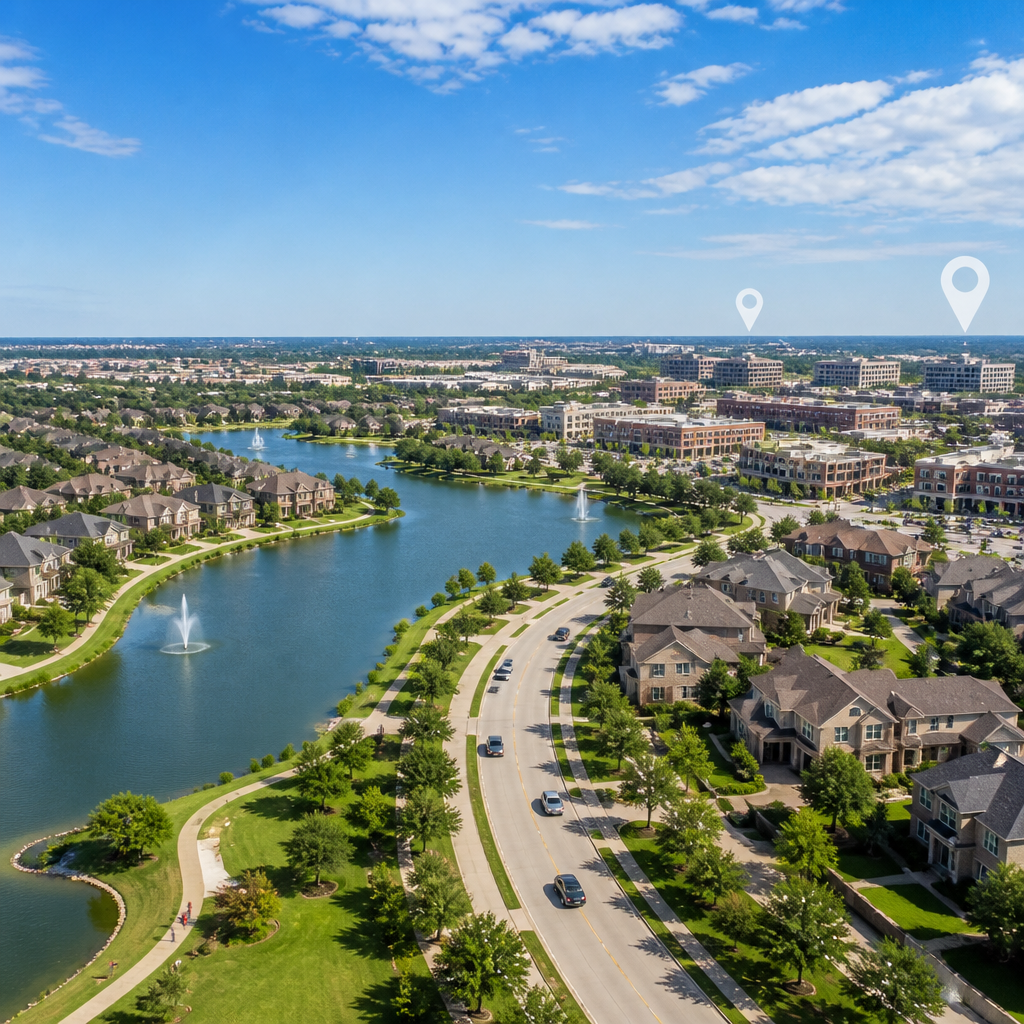
On late spring evenings around Lakeland Village Center in Bridgeland, the air often carries the smell of grilled food from patio restaurants, mixed with the sweet scent of nearby water lilies on Josey Lake. Warm light from storefronts reflects on the water while live music floats from the plaza, blending with the soft splash of kayaks. Laughter from families walking strollers along Greenhouse Road trails gives the entire lakeside promenade a relaxed, resort-style atmosphere.
Recreation options keep expanding. The Bridgeland community alone plans thousands of acres of trails and green space; according to Bridgeland, residents access more than $250 miles of trails and several community pools. Long-time locals near Fairfield Town Center use Cypress Park & Ride during the week, then spend Saturdays at Houston Premium Outlets, with over $145 retailers listed by Simon Premium Outlets. The result is a lifestyle that blends big-box convenience with increasing options for local dining and outdoor fitness.
Social life often takes shape around schools, churches, and sports leagues. Soccer complexes along Skinner Road, Little League fields near Cypress Lakes Golf Club, and fitness studios around Fry Road create regular meeting points. Cafes near Lone Star College–CyFair buzz during the academic year, while community events at Cypress Top Historic Park highlight the area’s railroad heritage. For many new residents, the change from dense urban neighborhoods to this activity pattern brings more time in cars, but also more private space and structured recreation.
How do Cypress TX neighborhoods and master-planned communities differ?
Neighborhood choice is central when moving to Cypress TX, because master-planned communities shape daily experience. Bridgeland, Towne Lake, Miramesa, Fairfield, and Cypress Creek Lakes each frame amenities differently. According to Niche, several of these communities rank among the top suburban areas in the Houston region, with high marks for housing and family-friendliness. Lakefront neighborhoods around Towne Lake feature a $300-acre lake, boardwalk dining, and boat docks, while more traditional subdivisions near Barker Cypress Road emphasize larger yard sizes and quiet cul-de-sacs.
Architectural styles also vary. Newer sections of Bridgeland and Miramesa emphasize modern brick and stucco exteriors, energy-efficient windows, and open-concept floor plans. Older pockets near Cypresswood Drive and Telge Road display mature trees, larger lots, and more diverse styles. According to Redfin, as of early 2026 many Cypress single-family homes close in the approximate range of $350,000 to $550,000, depending heavily on neighborhood amenities, age, and school assignment.
Master-planned communities typically bundle amenities into homeowner association fees. Pools, splash pads, pocket parks, fitness centers, and trails are standard in places like Cypress Creek Lakes and Fairfield. The number of on-site amenity centers can reach $5 or more in the largest developments, according to community maps published by Coventry Homes. In contrast, non-master-planned streets off Jones Road or Grant Road might offer lower HOA dues but rely more on nearby county parks such as Telge Park or Bud Hadfield Park for recreation.
Retail proximity often drives neighborhood preference. Homes near Fry Road and US 290 place residents within minutes of Houston Premium Outlets, H‑E‑B, Kroger, and restaurants lining Cypress Rosehill Road. Towne Lake’s Boardwalk delivers waterfront dining, while Fairfield Town Center focuses on big-box retail and daily services. The choice between immediate shopping and quieter, more tucked-away streets often shapes both lifestyle and long-term satisfaction for residents moving to Cypress TX.
What should be expected from schools and education in Cypress TX?
Cypress-Fairbanks Independent School District (CFISD) anchors education for families moving to Cypress TX. As of 2026, CFISD stands among the largest districts in Texas. According to CFISD, enrollment exceeds $118,000 students across dozens of campuses. High schools such as Cypress Ranch High School, Cypress Woods High School, Cy-Fair High School, and Cypress Springs High School serve large attendance zones stretching across Barker Cypress Road, Fry Road, and beyond, influencing housing demand within each boundary.
On Friday nights at Cy-Fair High School near Telge Road, stadium lights cut through the humid air while drumline rhythms echo across residential streets. The smell of popcorn and barbecue from concession stands drifts toward homes along Tuckerton Road, and cool metal bleachers vibrate with every cheer. Nearby, headlights line up along Cypress-North Houston Road as parents and students stream in, creating a festival-like glow over the surrounding neighborhoods.
Academic performance varies by campus, but several Cypress high schools and elementaries receive strong independent ratings. According to GreatSchools, Cypress Ranch High School and Pope Elementary earn scores in the $8 to $10 out of 10 range, making those zones particularly sought after. Middle schools like Anthony Middle School and Hamilton Middle School also receive above-average marks, drawing interest to subdivisions in Bridgeland, Fairfield, and nearby corridors.
Postsecondary access is strengthened by Lone Star College–CyFair, located near Barker Cypress Road and West Road. According to Lone Star College, tuition for in-district students averages roughly $100 per credit hour, offering an affordable path for associate degrees and workforce certificates. The campus library, arts center, and lakeside walking trails also function as community resources, providing quiet study space and cultural programming for residents throughout Cypress and neighboring suburbs.
How does commuting and transportation work when moving to Cypress TX?
Transportation planning is a key factor in moving to Cypress TX, because the area remains largely car-oriented. US Highway 290 serves as the primary spine, with major interchanges at Barker Cypress Road, Fry Road, and Telge Road. According to American Community Survey data for northwest Harris County, average one-way commute times often fall in the $30 to $35-minute range, though rush-hour trips toward Downtown Houston can stretch longer.
The METRO Cypress Park & Ride near Skinner Road offers an alternative to solo driving. According to METRO, express buses from this facility reach Downtown Houston in approximately $35 to $45 minutes, depending on traffic and schedule. For some residents, parking at the lot and riding express service reduces stress and fuel costs, while still providing predictable arrival times at major employment centers, including central business districts and the Texas Medical Center via connections.
Within Cypress itself, arterial roads such as Barker Cypress Road, Fry Road, Telge Road, and Cypress Rosehill Road handle most everyday traffic. According to congestion studies summarized by Houston-Galveston Area Council, peak delays on certain stretches can add $10 to $15 minutes to typical travel times during school drop-off and evening rush. Subdivisions with multiple entry points onto these arterials often experience smoother flows than single-entry neighborhoods, influencing resident satisfaction with day-to-day driving.
Pedestrian and bike infrastructure continues to expand, particularly in master-planned communities. Sidewalks, trails, and underpasses near Bridgeland, Towne Lake, and Miramesa connect homes to schools, pools, and retail. However, the broader Cypress area remains less walkable than urban Houston districts, as reflected in the previously mentioned Walk Score near $22. For many households, that reality encourages careful planning around school locations, workplace distance, and preferred Park & Ride options before finalizing a move.
What costs and housing options define moving to Cypress TX in 2026?
Housing costs when moving to Cypress TX in 2026 span a wide range, from starter homes to luxury estates. According to HAR.com, recent listings in Cypress include townhomes and smaller single-family residences starting around the mid-$200,000s, while larger properties in lakefront enclaves or golf course communities can surpass $1,000,000. These figures vary by condition, age, and school zoning, but collectively demonstrate that Cypress serves both first-time buyers and move-up households.
Ongoing ownership costs extend beyond the purchase price. Property tax rates in Harris County often land near the equivalent of $2% to $3% of assessed value annually, based on ranges published by the Harris County Appraisal District. Master-planned communities frequently layer HOA dues that can range from roughly $700 to $1,500 per year, depending on amenity levels and community size. Budgeting for those recurring obligations, along with insurance and utilities, is essential for long-term financial comfort.
Rental options also play an important role. According to market summaries from Apartments.com, many Cypress apartment communities price two-bedroom units in the approximate range of $1,400 to $1,900 per month as of early 2026. Single-family home leases in Bridgeland, Fairfield, or Cypress Creek Lakes commonly command higher monthly amounts, reflecting included yards, garages, and access to community amenities such as pools and splash pads.
New construction remains active along US 290, Fry Road, and Greenhouse Road, particularly in later phases of Bridgeland and Miramesa. Builders often advertise energy-efficient features, smart home systems, and upgraded finishes that reduce long-term utility costs compared with older housing stock. For some households, the trade-off involves accepting slightly smaller lots or higher HOA dues in exchange for lower maintenance and more inclusive amenity packages, shaping the overall affordability profile of moving to Cypress TX in 2026.
The $20% growth figure cited at the start of this guide reflects the sustained demand drawing new residents toward Cypress and its expanding neighborhoods. That same $20% increase in population underscores both rising competition for listings and the importance of timely market awareness in 2026. The Houston Association of Realtors (HAR) Cypress market pages provide regularly updated information on active inventory, recent sales, and price trends across local subdivisions. Buyers who register listing alerts through HAR and commit to touring promising homes within $48 hours of activation before the spring 2026 surge position themselves for stronger negotiation leverage. Households that delay those steps until after late-spring inventory tightens frequently face higher prices, fewer options, and more stressful contract timelines.
FROM OUR BLOG


Houston TX Real Estate Market Update: Trends You Need to Know for 2026
Houston TX Real Estate Market Update: Trends You Need to Know for 2026 Houston’s housing landscape is shifting ahead of 2026 as population growth, energy hiring, and infrastructure projects reshape demand. According to Zillow, the typical Houston home value sits in the range of $260,000 to $280,000
Luxury Homes in Sugar Land TX: Your 2026 Buying Guide
Luxury Homes in Sugar Land TX: Your 2026 Buying Guide Luxury homes in Sugar Land TX occupy a segment of the Houston region where strong schools, master-planned amenities, and established neighborhoods intersect. According to Redfin, Sugar Land’s median sale price in early 2026 sits in the range of $