
Houston TX Real Estate Market Update: Trends You Need to Know for 2026
Houston’s housing landscape is shifting ahead of 2026 as population growth, energy hiring, and infrastructure projects reshape demand. According to Zillow, the typical Houston home value sits in the range of $260,000 to $280,000 as of early 2024, after several years of steady appreciation. That level remains below peaks in coastal metros, yet it intersects with rising insurance costs, higher mortgage rates, and evolving neighborhood preferences from Downtown to The Heights along White Oak Drive.
How is the overall Houston TX real estate market positioned going into 2026?
Market balance remains the defining theme heading toward 2026. According to the Houston Association of Realtors, months of inventory across the metro has hovered between 2.8 and 3.5 months through late 2024, signaling a lean but not frantic environment. This level sits close to the line between seller-leaning and neutral conditions, particularly in central neighborhoods such as Midtown and East Downtown, where new townhome supply along McGowen Street and Polk Street continues to arrive.
While headlines often focus on rapid appreciation, price moves have grown more measured. Based on data from Redfin, Houston home prices have generally trended in the range of 2% to 5% annual growth since 2021, slower than some boom years but more sustainable. Median days on market in many ZIP codes near the Texas Medical Center and Rice Village still hover between 25 and 40 days, giving buyers slightly more breathing room while supporting solid seller expectations.
Demographic and economic fundamentals underpin this stability. The U.S. Census Bureau estimates Houston’s city population at roughly 2.3 million residents, with the metro surpassing 7 million, and Greater Houston Partnership analysis points to job growth in the range of 2% to 3% annually in recent years. Expanding employment around the Energy Corridor, Downtown office towers along Louisiana Street, and healthcare hubs near Hermann Drive continue to create a broad base of housing demand heading into 2026.
What are price and inventory trends across key Houston neighborhoods for 2026?
Neighborhood dynamics vary sharply between urban cores and suburban edges. According to Redfin’s Montrose data, many close-in areas with strong amenities, such as Montrose, Heights Boulevard corridors, and parts of the Museum District near Bissonnet Street, show typical home values in the broad band of $400,000 to $800,000. By contrast, farther-out areas like Cypress along U.S. 290 or Katy near Interstate 10 often present entry points between roughly $280,000 and $450,000, depending on age and school zoning.
Late afternoons along Westheimer Road in Montrose reveal many of these dynamics in real time. Sunlight reflects off glass-fronted townhomes near Common Bond Bistro, while the smell of espresso and freshly baked pastry drifts through open doors. Traffic hums past neon-lit signs at Uchi and Niko Niko’s, and the narrow streets south toward Richmond Avenue feel densely layered with renovated bungalows and new construction, making price gaps between one block and the next almost tangible for anyone studying the area.
Inventory levels also diverge. According to the HAR Heights market snapshot, active listings in Greater Heights have often remained under 300 properties in recent quarters, combining limited land with strong demand near Heights High School and the hike-and-bike trail by the White Oak Bayou Greenway. In contrast, master-planned communities around Cinco Ranch High School and Seven Lakes High School in Katy frequently carry several hundred active listings at a time, supported by ongoing new-home construction and larger parcel availability.
How are rents and investor activity shaping the Houston market outlook?
Rental dynamics exert growing influence over the 2026 outlook, particularly near employment centers. According to Zumper, median one-bedroom rents across Houston have generally fluctuated between $1,150 and $1,350 per month through early 2024, with two-bedrooms ranging from roughly $1,400 to $1,700. Midtown, the Washington Avenue corridor near Sawyer Yards, and the Galleria area around Westheimer Road often post higher rents, while neighborhoods farther along Beltway 8 can fall below metro averages.
Evenings around Bagby Street in Midtown illustrate rental demand in sensory terms. Music spills from patios near Christian’s Tailgate and Dogwood, while the smell of tacos from La Calle Taqueria mingles with exhaust from traffic heading toward Pierce Street. Lights from high-rise apartments along Gray Street and Drew Street glint against the glass, and the steady thrum of conversation hints at the concentration of renters who favor short commutes to Downtown offices and the Texas Medical Center.
Investor activity has adapted to higher rates and tighter underwriting. According to research by Federal Reserve Economic Data, 30-year mortgage rates have ranged between 6% and 7.5% since 2023, compressing cash flow on leveraged acquisitions. Many investors now target value-add duplexes near Texas Southern University, the University of Houston campus along Wheeler Avenue, or smaller multifamily buildings close to Memorial Park, seeking cap rates in the general band of 5% to 7% through strategic renovations rather than aggressive rent hikes alone.
What local economic and lifestyle factors will drive Houston housing demand in 2026?
Houston’s economic base continues to diversify beyond traditional energy. According to Greater Houston Partnership, sectors including healthcare, life sciences, and logistics have added tens of thousands of jobs since 2020, with overall employment growth frequently running between 2% and 3% annually. The Texas Medical Center near Fannin Street, headquarters towers around Allen Parkway, and port-related logistics hubs along the Houston Ship Channel all generate sustained housing demand across nearby neighborhoods and commuter suburbs.
Lifestyle amenities also influence where residents choose to concentrate. The park system, led by Hermann Park, Buffalo Bayou Park along Memorial Drive, and Discovery Green near Avenida de las Americas, has benefited from sustained investment. According to Walk Score, Houston’s overall walk score sits around 47, but select districts such as Downtown, Midtown, and Neartown-Montrose often score above 80, supporting higher-density living and mixed-use development around Main Street light rail stops and along Washington Avenue.
School performance anchors many long-term decisions. Data from GreatSchools shows standout campuses such as Carnegie Vanguard High School (rated near 10 out of 10), DeBakey High School for Health Professions, and certain programs at Lamar High School along Westheimer Road. In suburban areas, schools like Seven Lakes High School in Katy and Cy-Fair High School in Cypress help sustain demand for single-family homes, often supporting price resilience even when broader market momentum slows.
How should Houston buyers and sellers interpret these 2026 trends?
Market participants increasingly focus on micro-location and holding period rather than short-term price jumps. According to Realtor.com, listing volumes across Houston have stayed within roughly 15,000 to 20,000 active properties in recent seasons, a level that allows careful comparison between streets and school zones. In neighborhoods such as Garden Oaks and Oak Forest near Wakefield Drive, renovated mid-century homes can trade at meaningful premiums over unrenovated stock only a few blocks away.
Financing structure also matters. Conventional buyers often bring down payments of at least 10% to 20%, while FHA loans remain available with minimum down payments of 3.5%, as outlined by HUD. Higher interest rates make locking in favorable terms crucial for long holding periods, particularly for properties near high-demand destinations like Rice University, the University of St. Thomas along Montrose Boulevard, or Houston Baptist University off Beechnut Street, where long-term desirability has historically supported values.
Risk assessment increasingly includes insurance and climate considerations. Elevated insurance premiums in parts of the Houston metro, especially closer to Galveston Bay or flood-prone areas along Brays Bayou and Greens Bayou, can add several hundred dollars per month to ownership costs. Many participants now scrutinize elevation certificates, updated floodplain maps, and recent mitigation work near streets such as Braeswood Boulevard and Tidwell Road to gauge long-term resilience and alignment with budget expectations in a 2026 context.
The $260,000 to $280,000 typical home value range cited at the start of this guide reflects a market that still offers relative affordability compared with many coastal metros while absorbing higher borrowing and insurance costs. That band from the opening underscores both the opportunity and the discipline required as 2026 approaches. The Houston Association of Realtors online market dashboard provides detailed, continuously updated views of inventory, pricing, and absorption across specific neighborhoods and school zones. Buyers and renters who register alerts through that platform and commit to touring promising properties within 48 hours of listing, before the late-spring surge in May activity, tend to secure contracts with stronger terms, while those delaying decisions until after that seasonal peak often face steeper competition and reduced leverage.
FROM OUR BLOG
Luxury Homes in Sugar Land TX: Your 2026 Buying Guide
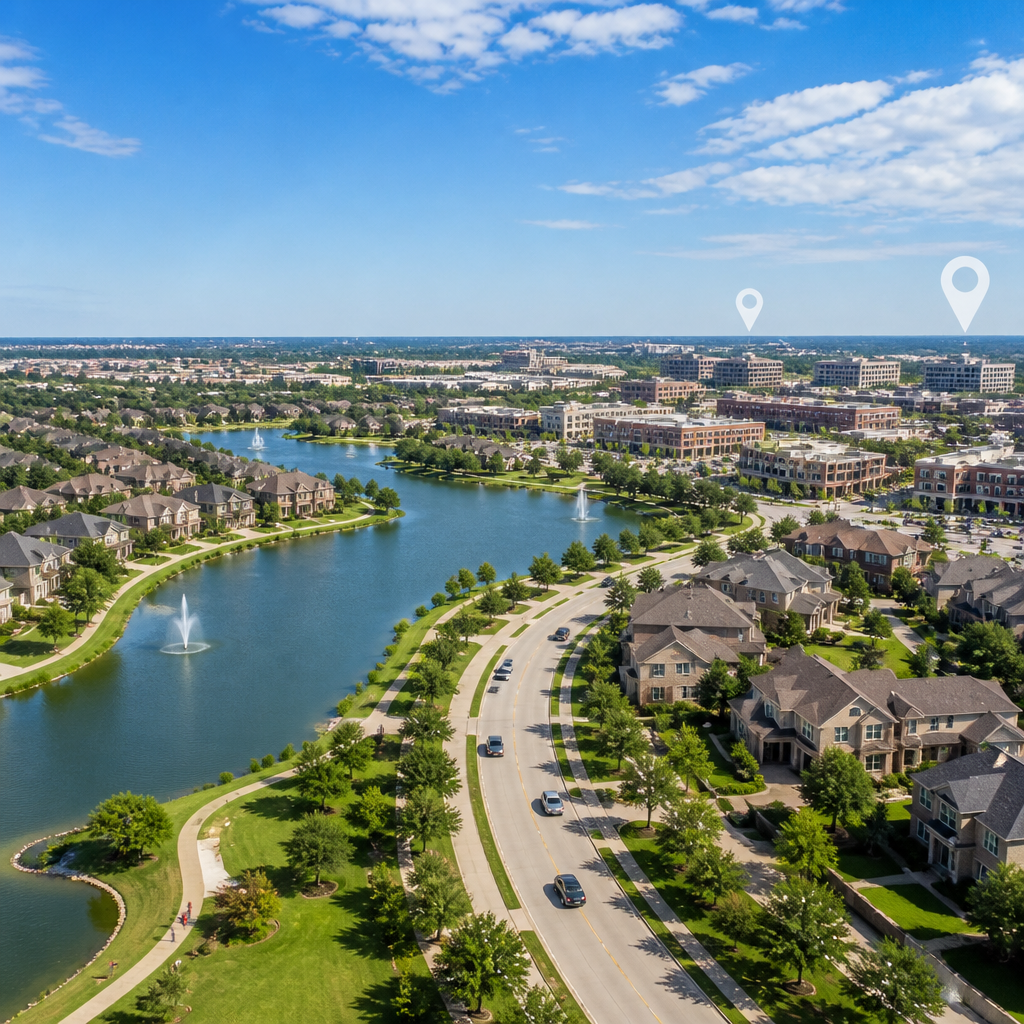
Luxury Homes in Sugar Land TX: Your 2026 Buying Guide Luxury homes in Sugar Land TX occupy a segment of the Houston region where strong schools, master-planned amenities, and established neighborhoods intersect. According to Redfin, Sugar Land’s median sale price in early 2026 sits in the range of $
Moving to Cypress TX: What to Expect in 2026
Moving to Cypress TX: What to Expect in 2026 Moving to Cypress TX in 2026 means entering one of northwest Houston’s fastest-growing suburbs, with strong population gains and expanding infrastructure. According to U.S. Census Bureau estimates, the Cypress area has added roughly $20% more residents ov